Master Bedroom Design in the Tropics | Private Sanctuary Living
Master Suite Design: Creating Your Private Sanctuary in a Tropical Setting
There is a particular kind of morning that becomes possible when your home is designed with intention.
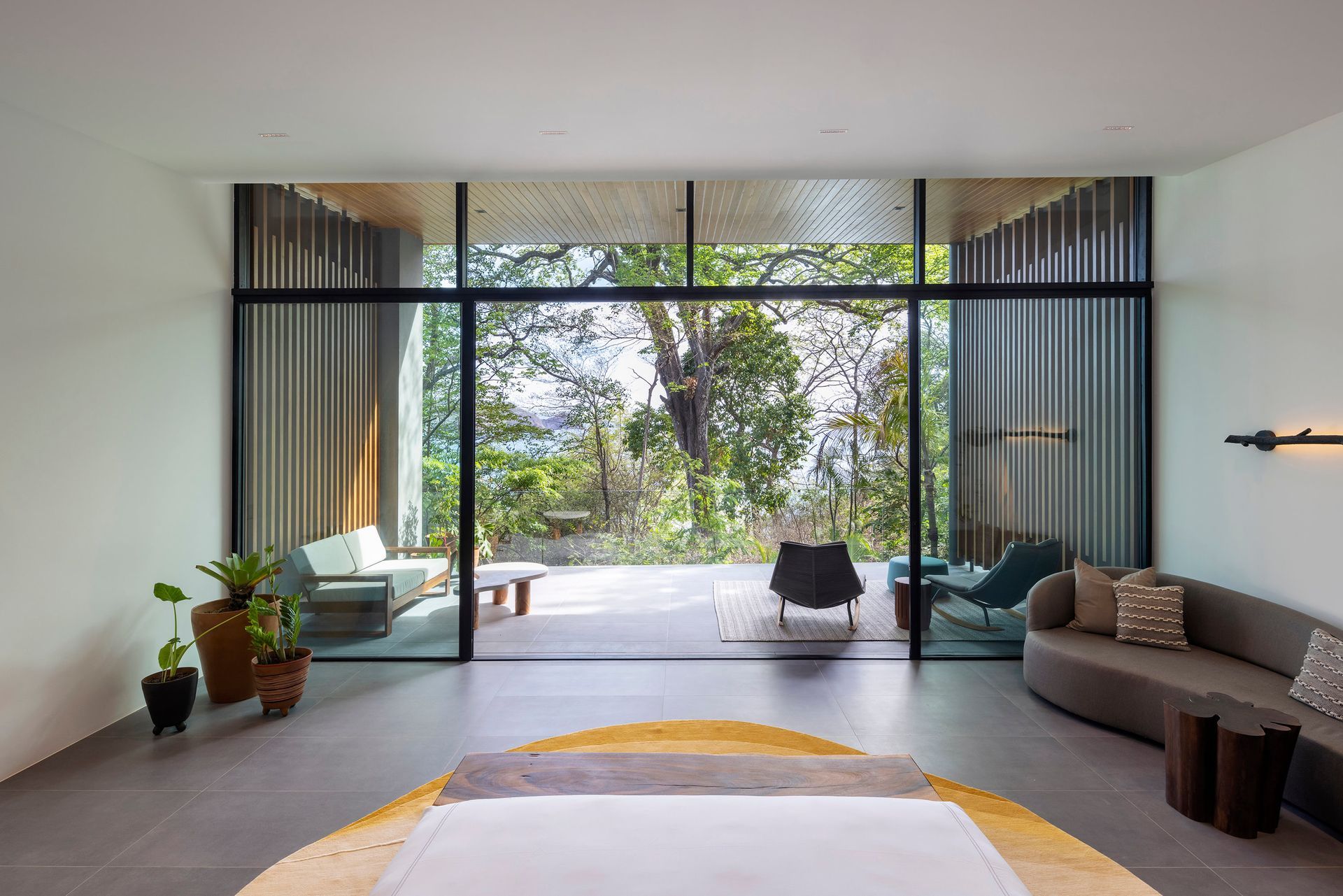
You wake slowly, drawn into consciousness not by an alarm but by the quality of light shifting across the ceiling, warm, golden, arriving at an angle only possible because your architect placed your bedroom exactly where the sun would find you first. A breeze moves through the room. Somewhere beyond the open terrace, the jungle stirs.
This is not a hotel. This is your home.
In tropical residential design, the master suite holds a singular position. It is not simply the largest bedroom. It is the most private expression of how you choose to live, a room designed around your rituals, your rhythms, and your relationship with the landscape that surrounds you.
When designed with the care and intentionality that a tropical setting demands, the master suite becomes something rarer and more valuable than square footage: it becomes a sanctuary.
At SARCO Architects, we have spent years refining our understanding of what that sanctuary should feel like — and more importantly, what it takes to design one that truly delivers.
Orienting the Master Suite: Capturing Light, Air, and Views
Every exceptional master bedroom begins long before the interior details are considered. It begins on the floor plan, with a fundamental question: where does this room belong?
In a tropical setting, orientation is everything. The position of the master suite on the site determines the quality of light that enters each morning, the direction of the prevailing breeze, and the views the room will frame for the life of the home.
These are not adjustable after the fact. They are foundational decisions that shape every experience the room will ever offer.
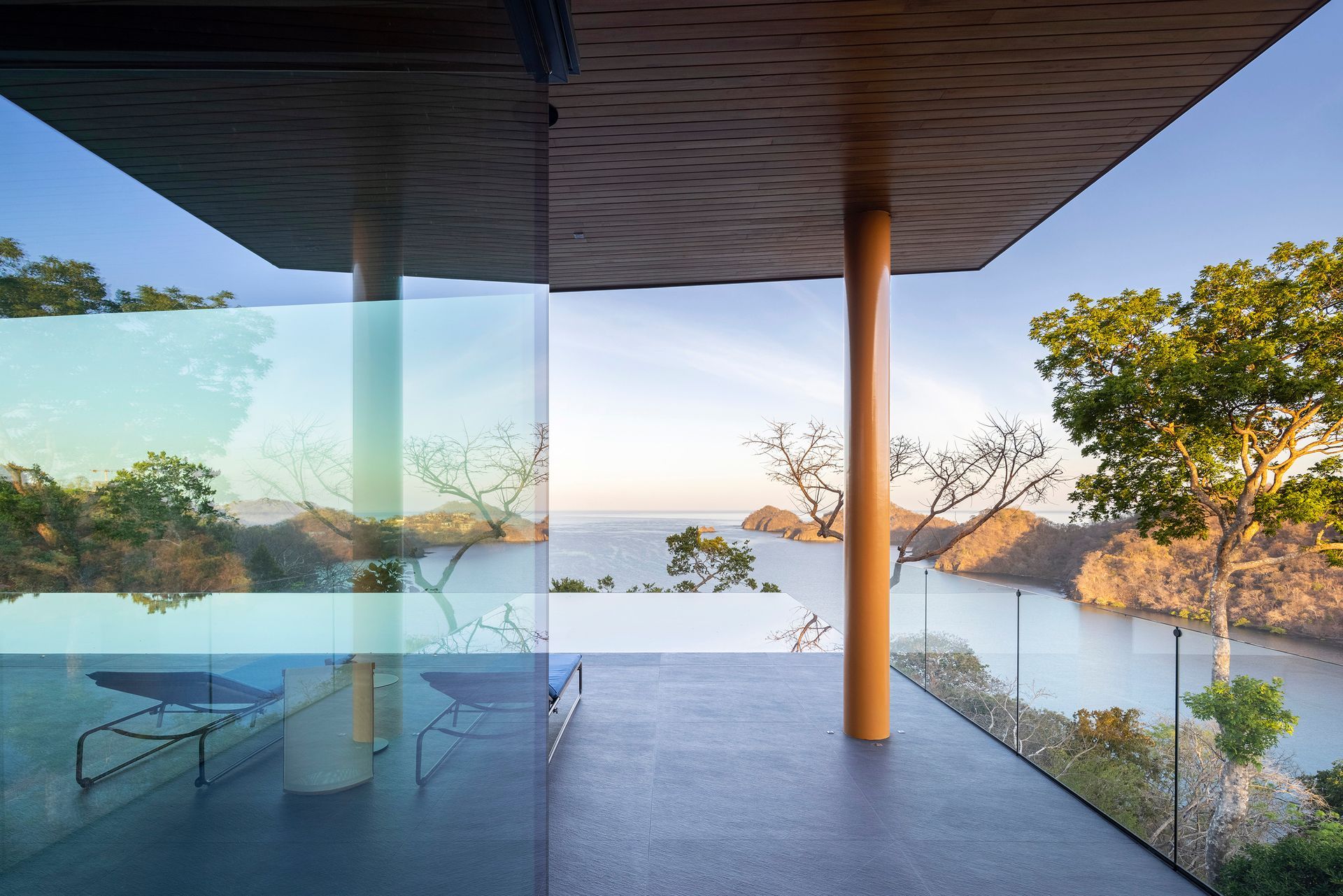
At SARCO, we study each site carefully before committing the master suite to any position. We look at solar paths to understand where morning light will arrive and how to welcome it without inviting the heat that follows later in the day. We analyze prevailing wind patterns to align the room's openings with the breezes that make natural cooling possible. We identify the view corridors — the sightlines to the ocean, the canopy, or the garden — that will define what you see from your bed each morning.
Privacy is equally considered. The master suite must feel removed from the activity of the home and the presence of neighbors, creating a genuine sense of seclusion even on a property that is otherwise open and social.
Achieving this without sacrificing the connection to landscape that makes tropical living so compelling is one of the more nuanced challenges in site planning and one of the most rewarding to solve well.
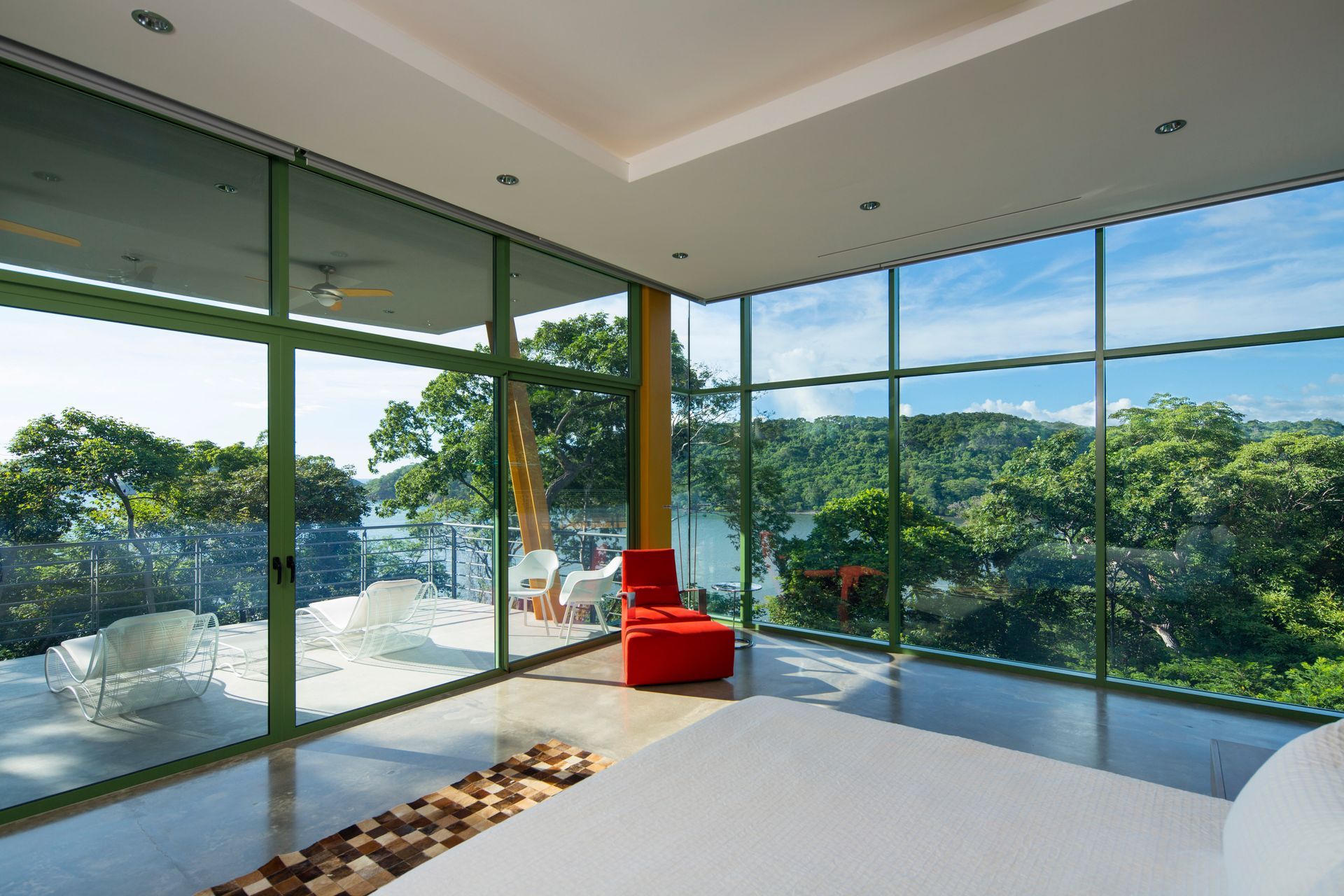
The Indoor-Outdoor Relationship
If orientation determines where the master suite sits in relation to the world, the indoor-outdoor relationship determines how deeply that world is allowed to enter.
Tropical modern architecture is defined by its refusal to treat the interior and exterior as separate domains. Nowhere is this philosophy more powerfully expressed than in the master suite.
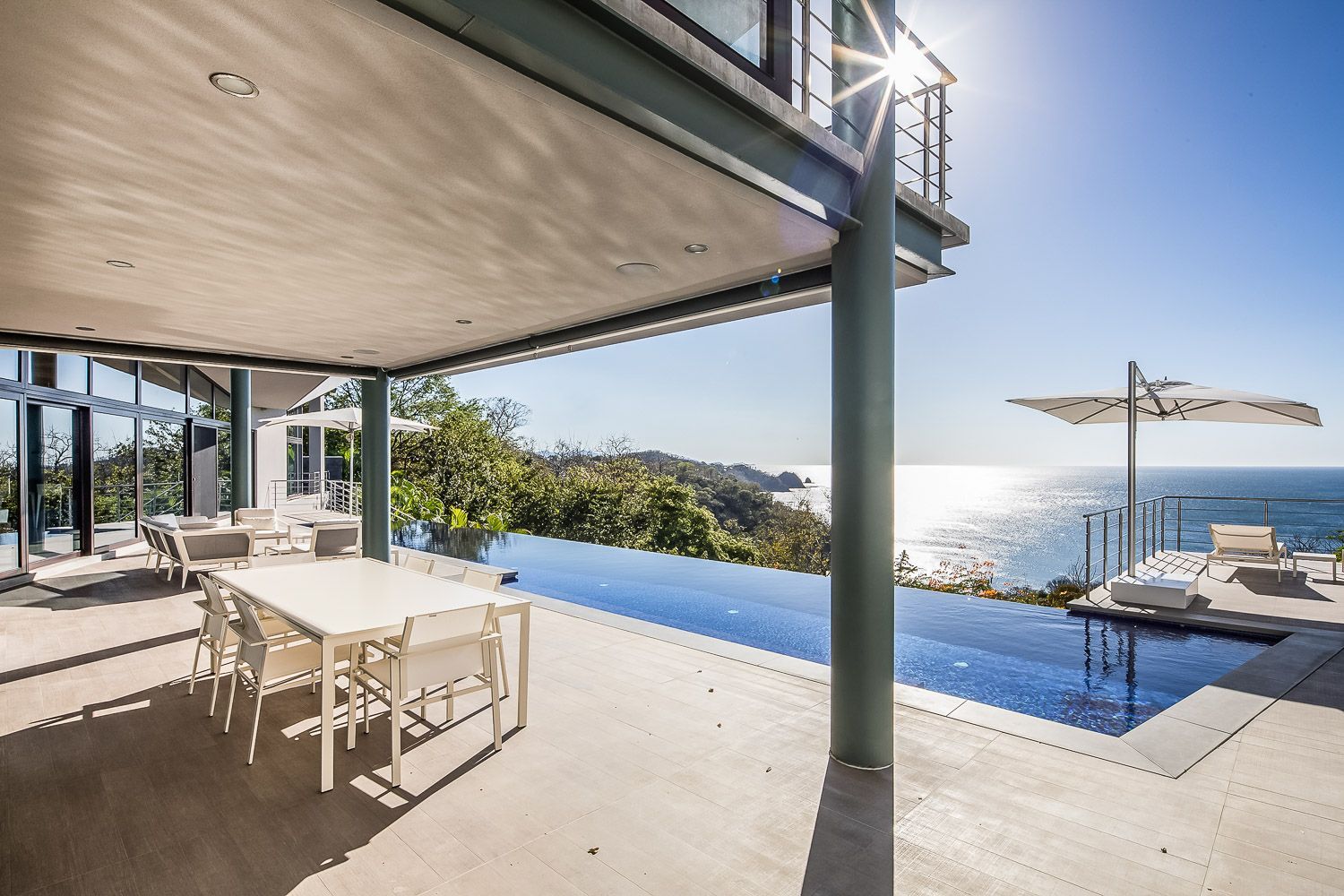
When the walls open, truly open—not merely a window—the room expands beyond its physical boundaries. The terrace becomes an extension of the bedroom. The canopy becomes part of the ceiling. The landscape becomes the art.
Achieving this requires architectural decisions that go well beyond selecting large windows.
Folding or pivoting glass wall systems allow entire façades to disappear, creating a seamless threshold between inside and out. Floor materials, natural stone, large-format tile, reclaimed hardwood, are selected to continue without interruption from the interior to the terrace, reinforcing the sense of one unified space. Plunge pools and outdoor soaking tubs are positioned not as amenities but as design elements, placed to maximize privacy and view simultaneously.
Landscaping plays an equally important role. Planted screens of tropical foliage, carefully positioned canopy trees, and sculpted garden rooms create the sense of intimate enclosure that allows the master suite to open completely without ever feeling exposed.
Nature becomes architecture. The boundary between built and grown dissolves entirely.
Climate Comfort by Design
There is a misconception that tropical living means choosing between beauty and comfort, that open, airy spaces come at the cost of climate control, or that staying cool requires sacrificing the connection to the outdoors.
The most comfortable tropical primary bedrooms are not those with the most powerful air conditioning systems. They are the ones that were designed from the beginning to work with the climate rather than against it.
Ceiling heights are calibrated to allow heat to rise and stratify well above the inhabited zone of the room. Cross-ventilation is planned deliberately, with openings positioned on opposing walls or at different elevations to create airflow that moves through the space continuously. Operable clerestory windows and louvered panels allow air to circulate even when larger openings are closed for rain or privacy.
Material choices matter enormously. Natural stone floors stay cool underfoot even in the heat of the afternoon. Thick walls with proper insulation moderate temperature swings between day and night. Deep roof overhangs shade the glass during peak sun hours while still framing the view. These are passive strategies, elegant, silent, and maintenance-free, that reduce reliance on mechanical systems while delivering a more natural and pleasant living experience.
The result is a room that breathes. One that feels alive in a way that a sealed, climate-controlled box can’t match.

In bespoke tropical master bedroom design, the bathroom is not an afterthought. It is a continuation of the sanctuary, another layer of privacy, beauty, and sensory pleasure that deepens the overall experience of the space.
The most memorable tropical ensuites draw from the same design principles as the bedroom itself. They open to sky and garden where privacy permits, bringing natural light and moving air into spaces that in other climates might feel enclosed. Open-air or semi-open shower enclosures, framed by stone walls and lush planting, transform the daily ritual of bathing into something that feels more like a private garden moment than a utilitarian necessity.
Natural materials define the palette. Locally sourced stone, teak, and hand-finished surfaces connect the bathroom to its setting and develop a patina over time that only deepens their beauty. The freestanding soaking tub, positioned to capture a view or face a garden wall, becomes a focal point that anchors the room architecturally and offers a distinct counterpoint to the open, flowing character of the shower.
Dual vanities, generous dressing areas, and seamlessly integrated storage ensure the space functions as well as it feels.
Lighting is layered, task lighting for practical use, softer ambient sources for evenings, and where possible, the natural illumination of a skylight or high window that fills the room with a quality of light no fixture can replicate.
Bespoke Details That Elevate the Experience
The difference between a well-designed master suite and an exceptional one often lives in the details, the decisions that are specific to you, and that quietly shape every interaction you have with the room.
Custom millwork is one of the most powerful tools in this regard. Built-in wardrobes in your closet, bedside niches, reading alcoves, and coffee stations designed into the architecture of the room eliminate visual clutter and create a sense of order that feels effortless.
Everything has a place. Everything is where you expect it to be.
Lighting design deserves the same level of consideration as any other architectural element. In a tropical master suite, lighting must serve multiple modes: the gentle warmth of early morning, the practical clarity of getting dressed, the ambient softness of an evening spent reading or unwinding on the terrace.
Dimmer-controlled circuits, carefully positioned fixtures, and the occasional unexpected detail, a lantern hung in the garden visible from the bed, a strip of light beneath a floating vanity, transform the room at night into something entirely different from its daytime self.
Acoustic design is an aspect of luxury that is rarely discussed but immediately felt. A well-designed master suite should be genuinely quiet, allowing the sounds of the natural environment to enter, while filtering out mechanical noise, household activity, and exterior disturbance. This requires attention to wall assemblies, ceiling construction, and the placement of mechanical systems from the earliest stages of design.
Technology, when integrated thoughtfully, should disappear entirely into the aesthetic. Automated shading, climate control, and audio systems that respond to simple commands enhance the experience of the room without demanding visual or cognitive attention. The best smart home integration is the kind you forget is there.
SARCO's Approach: Designing Around How You Live
At SARCO, we believe that designing an exceptional master suite begins not with architecture, but with conversation.
Before we draw a single line, we ask our clients to describe their mornings. How do they wake up? Do they move immediately to coffee and a view, or do they linger in bed? Do they share the space with a partner whose schedule differs from their own? Do they exercise, meditate, or read before the day begins?
What does unwinding look like at the end of the day — a long soak, an evening on the terrace, an early night with a book?
These are not casual questions. The answers become the brief. They shape the orientation of the room, the layout of the master bath, the position of the terrace, and the location of every built-in element within a walk-in closet.
The result is a master suite that fits, not in the generic sense of meeting a program, but in the deeply personal sense of feeling as though it was made for the specific way you move through the world.
"The master suite is the most intimate space in any home we design," says Roderick Anderson, Principal of SARCO Architects. "Getting it right means understanding not just what our clients want to see when they walk in, but how they want to feel every single morning they wake up there. That understanding is where the design actually begins."

Your Sanctuary, Designed for You
A master suite that functions as a true sanctuary does not happen by accident. It is the result of careful site analysis, thoughtful architecture, skilled craftsmanship, and a design process rooted in genuine understanding of how you live. In a tropical setting, where the landscape is extraordinary and the opportunity for indoor-outdoor living is unmatched, the stakes — and the possibilities — are even greater.
The question is not whether your home can have a master suite of this caliber. It is whether the team designing it knows you well enough to create one.
If you are planning a luxury residence in Costa Rica and want to explore what a bespoke master suite could look like for your life, we invite you to connect with the SARCO team.
FAQ: Master Suite Design in a Tropical Setting
What makes a master suite work in a tropical climate?
The most successful tropical master suites are designed to work with the climate rather than against it. This means careful solar orientation, natural ventilation strategies, appropriate material selection, and deep roof overhangs — passive design decisions that create comfort without relying entirely on mechanical systems.
How do I maximize privacy without losing natural light?
Privacy and natural light are not mutually exclusive. Thoughtful site planning, strategic landscaping, and the use of clerestory windows or skylights can flood a space with light while maintaining complete seclusion from neighbors and the street.
Can an open-air bathroom work year-round in Costa Rica?
In many regions of Costa Rica, yes — with the right design. Semi-open ensuites with well-positioned overhangs, drainage planning, and screened openings can function beautifully through both dry and rainy seasons. Your architect should design for both conditions from the outset.
How early in the home design process should I think about the master suite?
From the very beginning. The orientation, privacy, and view considerations that make a master suite exceptional are site-planning decisions that cannot be effectively revisited once the overall layout is established.
What features do most clients wish they had included in their master suite?
More storage, better acoustic separation from the rest of the home, a dedicated morning coffee area, and — almost universally — a larger or better-positioned terrace. These are decisions that feel optional in the design phase and essential interior design elements once you are living in the space.
Ready to design a home that begins with how you want to feel?
Schedule your consultation with SARCO Architects
SARCO Architects Costa Rica